What a chain actually records
You will be able to read a block, say what it contains, and explain why nobody can quietly rewrite one.
The ledger
A list of movements that everyone keeps a copy of.
A blockchain is a ledger: an ordered record of who transferred what. What makes it different from a bank's ledger is not the recording — banks do that well — but the copying. Every node keeps the whole record and checks every new entry against the same rules, so no single operator, including the one who wrote the software, can add a line the others will accept without it being valid.

The block
Entries are grouped, and each group names the one before it.
Transactions are gathered into blocks, and every block header carries the hash of the previous block. Change one transaction in block 500 and its hash changes, which changes block 501's header, and so on to the tip. Rewriting history is therefore not an edit but a rebuild of everything that came after it — in public, faster than the rest of the network is building forward.
The coins themselves
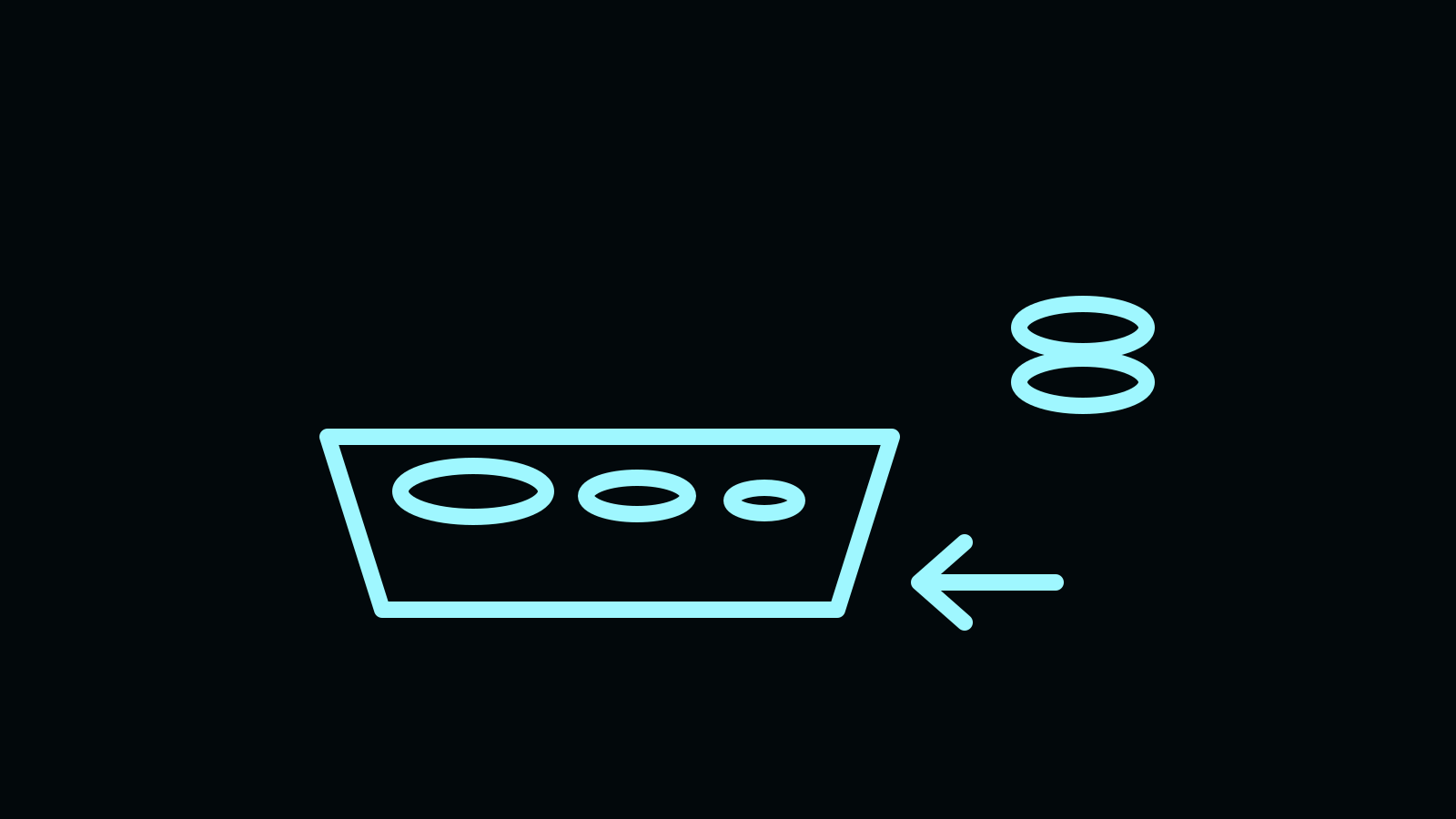
VigiChain has no balances. It has unspent outputs.
Like Bitcoin and unlike most account-based chains, VigiChain tracks discrete unspent outputs (UTXOs), not a number next to your name. Paying someone consumes whole outputs and creates new ones — theirs, and your change. Your "balance" is simply the sum of the outputs you can sign for, which is why the wallet talks about inputs and change when a payment is built.
Reading one yourself
Nothing here asks you to take our word for it.
Open VigiScan, pick any block, and you will see its height, its hash, the previous hash it commits to, its timestamp and the transactions it carries. The home page of this site goes one step further: it rebuilds a real block header in your own browser and shows you the hash it gets. If it did not match the network, the page would say so.
In short
- A chain is a replicated ledger whose entries are checked by rule, not by authority.
- Each block commits to the previous one by hash, so editing the past means rebuilding the present in public.
- VigiChain is a UTXO chain: you spend discrete outputs and receive change.
- Every claim in this lesson is checkable on VigiScan in under a minute.